

When most healthcare marketers think about growth, they think about patients.
Children’s healthcare is different.
The patient isn’t making the decision. Parents are. And those decisions are often made during moments of uncertainty, stress, and urgency. In those moments, families aren’t evaluating brands the way consumers evaluate products. They’re looking for confidence. Confidence that they’re making the right choice. Confidence that their child will receive exceptional care. Confidence that the people on the other side of the experience understand what’s at stake.
That’s why the strongest children’s healthcare brands aren’t simply competing for patients. They’re competing for confidence long before care is ever needed.
Trust Is Built Before Demand Exists
Most healthcare organizations invest heavily in being present when someone is actively seeking care. Search marketing, service-line campaigns, physician referrals, and appointment acquisition all play important roles. But pediatric healthcare often operates differently. When a parent suddenly needs specialized care for their child, they’re not typically starting from scratch. They’re relying on perceptions, recommendations, and trust that have been built over time.
Consider St. Jude Children’s Research Hospital. Most families will never receive care there, yet it remains one of the most recognized and trusted healthcare brands in the country. Its success isn’t driven solely by awareness. It’s driven by decades of consistently building emotional trust and reinforcing a clear mission.
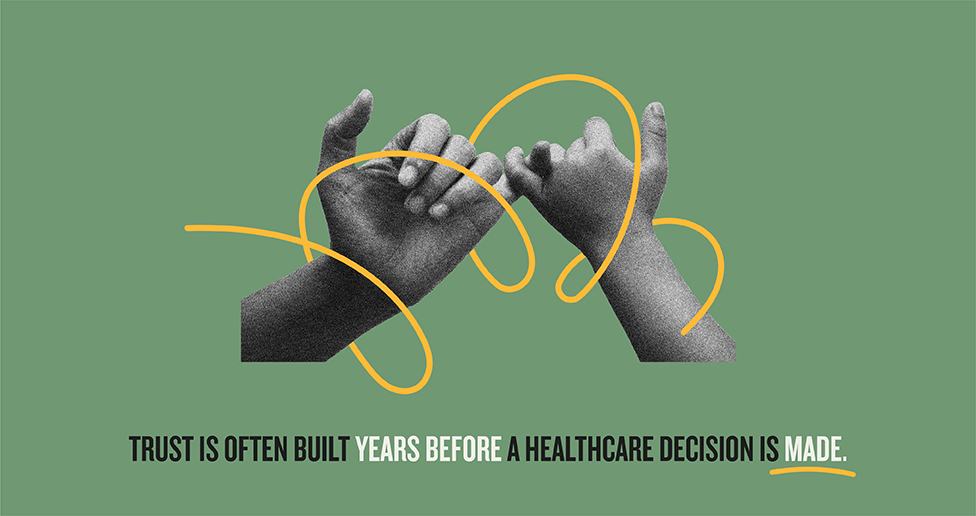
The lesson for children’s healthcare organizations is straightforward: trust is often built years before a healthcare decision is made.
Families Experience One Brand
Healthcare organizations are organized around specialties. Families aren’t.
Parents don’t think in terms of cardiology, orthopedics, oncology, or neurology. They think about finding the best possible care for their child. That’s why strong pediatric healthcare brands create value beyond individual service lines.
Organizations like Boston Children’s Hospital have built reputations that extend across specialties. The institutional brand itself becomes a signal of quality and reassurance. In many cases, families choose the organization first and the specialty second.
A strong brand creates confidence that benefits every service line it represents.

Expertise Matters. Humanity Matters More.
Clinical excellence will always matter. Research leadership, outcomes, innovation, and physician expertise are foundational to any healthcare organization’s success. But when parents are making decisions about their children, expertise alone isn’t enough.
The most effective children’s healthcare brands understand that healthcare decisions are both rational and emotional. They communicate advanced medicine and compassionate care in equal measure.
Organizations like Cincinnati Children’s consistently demonstrate this balance. Their communications celebrate clinical achievements while remaining grounded in the experiences of patients, families, and caregivers. Parents want the best care available. They also want to know that someone understands what they’re going through.
Brand and Performance Are Not Opposing Strategies
One of the most common debates in healthcare marketing is how to balance long-term brand building with short-term performance marketing. The reality is that the strongest healthcare organizations rarely choose one over the other.
Brand creates familiarity. Familiarity creates trust. Trust improves engagement, consideration, referrals, and conversion.
In other words, strong brands make performance marketing more effective. The principle is visible across healthcare. Organizations with strong reputations often benefit from higher direct traffic, stronger referral patterns, greater media efficiency, and increased patient preference.
Brand building isn’t separate from performance. It often amplifies it.

The Next Frontier Is Discovery
The healthcare journey continues to evolve. Historically, healthcare discovery was relatively straightforward. Families searched online, visited websites, compared providers, and sought recommendations from trusted sources.
Today, discovery is becoming increasingly fragmented. Parents gather information from social platforms, online communities, streaming content, physician referrals, search engines, and, increasingly, AI-powered tools.
As these behaviors continue to change, one thing becomes clear: organizations that have invested in trust, authority, and reputation will be better positioned to adapt. Technology will change. Human behavior won’t. Families will continue to seek confidence from organizations they know and trust.
The Opportunity Ahead
Children’s healthcare organizations occupy a unique place in their communities. They market services that families hope they’ll never need. They balance clinical excellence with profound human responsibility. And they often earn trust long before they earn a patient.
That’s what makes children’s healthcare marketing different. The organizations that recognize this distinction won’t simply grow awareness or drive demand. They’ll build confidence. And in children’s healthcare, confidence is often the most valuable asset a brand can possess.
At MBB, we’ve spent years helping healthcare organizations build the brands families turn to when it matters most. If you’re ready to think differently about how your brand grows, let’s talk.