In today’s marketing landscape, brands can’t rely on guesswork to plan for the future. Marketing budgets are always under pressure, growth is required, and leadership teams expect strategy behind every dollar spent. That’s why data modeling has become one of the most important tools in modern marketing planning.
At MBB, we’ve incorporated data modeling into our planning process to give brands a clearer picture of what future performance could look like. Data modeling is grounded in historical data, not assumptions. By analyzing past results and adjusting key variables like budget, channel mix, and growth targets, we can project realistic, data-backed outcomes before a single dollar is invested.
Here’s how it works—and why it’s helping our clients plan smarter.
Using Historical Data as the Foundation
Every strong marketing forecast starts with clean, reliable historical data. At MBB, we use performance data from previous time periods. Depending on the industry, this could include things like attributed sales, patient volume, account sign-ups, return on ad spend (ROAS), channel performance, and tactic-level efficiency to understand where marketing campaigns have created the most value. Performance varies across audiences and channels, highlighting clear opportunities for optimization.
By building our models on real numbers, not industry averages or assumptions, we can set up projections that reflect the brand’s unique marketing performance.
Variables That Shape Future Outcomes
Data modeling allows us to adjust multiple variables that influence projected results. A few of the most impactful include:
Budget Levels
How much a brand invests and how that investment changes year to year have a direct effect on projections.
Channel Allocation
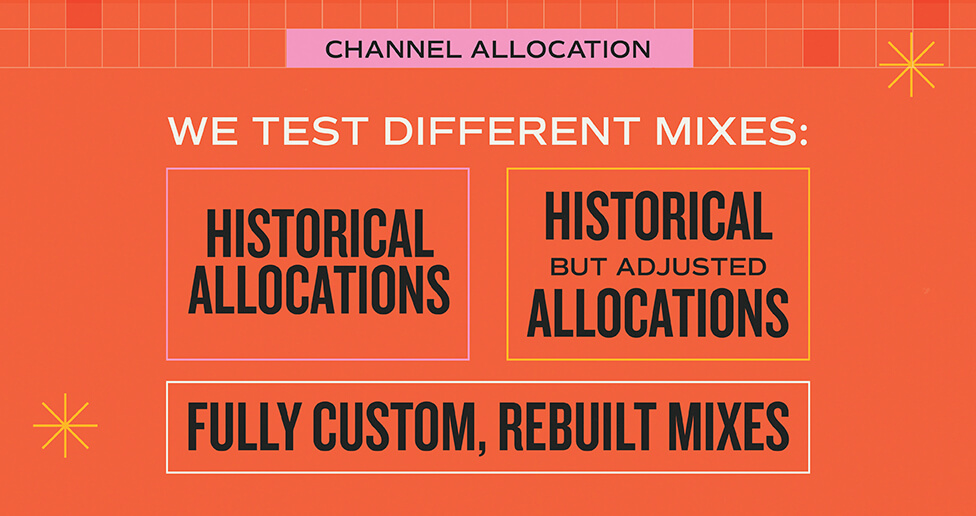
We test different mixes:
- Historical allocations
- Historical but adjusted allocations (based on measurable tactics)
- Fully custom, rebuilt mixes
This ensures brands invest in the channels most likely to drive measurable growth.
Growth Goals
Whether the goal is 3% or 10% year-over-year growth, the model adjusts projections accordingly.
Business Objectives
We begin by aligning on the brand’s annual business targets and determining what portion of those targets marketing is expected to influence.
For example:
- If a hospital’s service-line patient volume goal is a 5% increase, we may need to acquire 1,000 new patients. If the goal is 10%, we need to create a media plan targeted at acquiring 2,000 new patients.
- If a sales goal increases 3%, the projected sales target might be ~$2M. At a 10% increase, the target grows to $3M or beyond, which will impact our planning.
ROAS Expectations
We factor in diminishing returns—for example, when spend increases significantly, ROAS typically decreases proportionally.
Together, these variables give us the flexibility to test any number of business scenarios quickly and accurately.
Scenario Planning: Turning Data into Decisions
One of the most valuable benefits of data modeling is scenario planning. We can model what happens if:
- The budget stays flat
- The budget increases or decreases
- The brand shifts more dollars to high-performing channels
- Marketing is responsible for more (or less) business impact
- Certain tactics are removed entirely
For example, when we held the budget and historical allocations flat, we exceeded the sales goal by $5M. However, in scenario planning – where marketing was responsible for a greater share of total sales – the same budget fell short. From there, our team reallocated spend toward measurable-sales channels to close the gap and restore the required performance.
Scenario planning ensures that every recommendation is rooted in measurable outcomes and not guesswork.
How Data Modeling Helps Brands Make Smarter Decisions
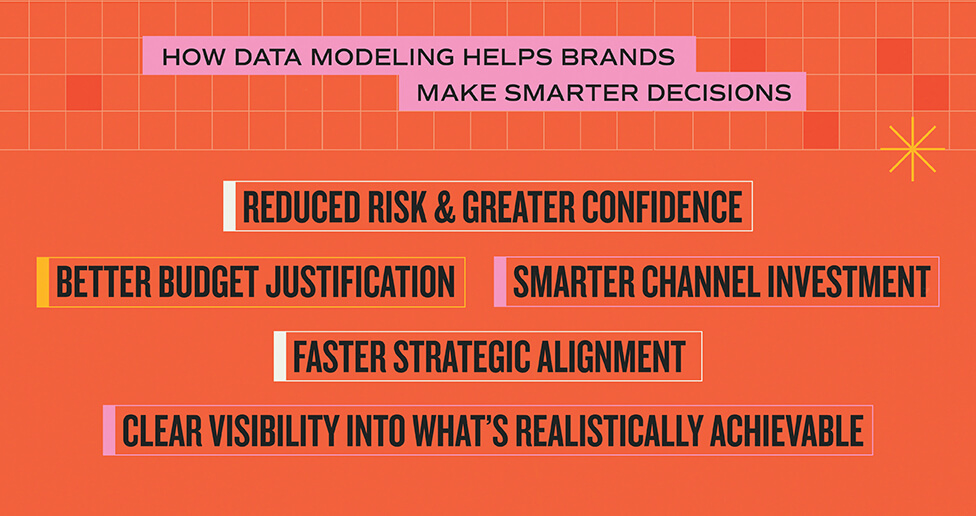
Clear Visibility into What’s Realistically Achievable
Instead of planning based on hopeful assumptions, brands see what their budget and strategy can truly deliver.
Better Budget Justification
Modeling provides evidence that CFOs and leadership teams appreciate.
Smarter Channel Investment
Reveals the tactics and channels that consistently drive measurable return.
Faster Strategic Alignment
Sales, finance, and marketing teams can rally around a common, data-driven plan.
Reduced Risk and Greater Confidence
Data modeling empowers brands to walk into the year with clarity—not uncertainty.
More Confidence, Less Guesswork
By integrating data modeling into our planning process, MBB gives clients the confidence to move forward knowing their decisions are supported by real insights and historical performance.
If your brand is planning for next year and wants deeper clarity around what to expect, our team can help you build a data-driven strategy that’s both ambitious and achievable.
Subscribe to our newsletter
Get our insights and perspectives delivered to your inbox.